When designing a lighting fixture, the finish of the glass is just as important as the shape. A frosted (opaque) finish is a popular choice because it diffuses light softly, hides the bulb, and eliminates glare.
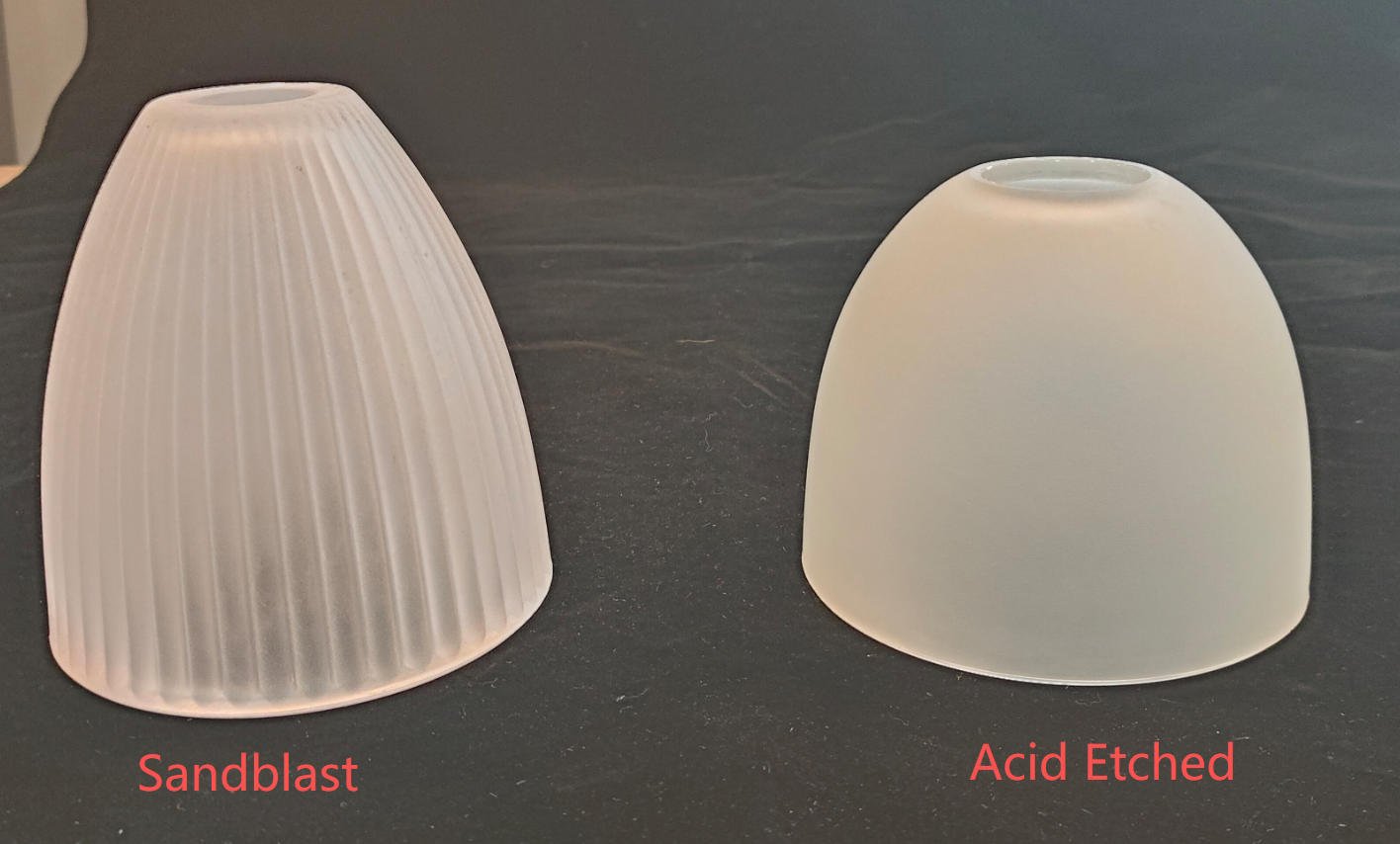
However, not all “frosted” glass is created equal. The two most common methods to achieve this look are Acid Etching (Chemical) and Sandblasting (Physical).
At YaoLampGlass, clients often ask us: “Which one is better?” The answer depends on your budget, application, and the tactile experience you want to create. Here is a comprehensive comparison to help you choose.
| Feature | Acid Etched Glass | Sandblasted Glass |
|---|---|---|
| Process | Chemical treatment | High-speed grit blasting |
| Surface Texture | Extremely smooth, Satin-like | Rough, Pitted texture |
| Maintenance | Easy to clean, Fingerprint-resistant | Hard to clean, Traps oils/dust |
| Durability | Permanent, does not degrade | Permanent, but surface can stain |
| Cost | Higher ($$$) | Lower ($$) |
| Best For | High-end fixtures, Table lamps (touched often) | Project lighting, Ceiling fixtures (untouched) |
1. The Process :
Understanding how they are made helps explain the difference in quality.
- Sandblasted Glass: This machine-driven process blasts sand or other abrasive materials at the glass surface at high speed. It physically erodes the surface, creating a rough, pitted texture that scatters light.
- Acid Etched Glass: This involves treating the glass with hydrofluoric acid. The acid chemically corrodes the surface layer, resulting in a microscopic, uniform finish. It is often called “Satin Glass” due to its look and feel.
2. Texture and Touch :
If your customers will be touching the lamp, pay attention to this section.
- Sandblasted: Rough to the touch. If you run your fingernail across it, it feels like fine sandpaper.
- Acid Etched: Incredibly smooth and silky. It feels luxurious and high-end, offering a true “soft-focus” visual effect that looks more consistent than sandblasting.
3. Maintenance and Fingerprints :
This is the biggest practical difference for the end-user.
- Sandblasted: Because the surface is rough and pitted, it traps oils and dust easily. If you touch sandblasted glass with bare hands, it will leave visible fingerprints that are notoriously difficult to clean.
- Tip: We often recommend coating sandblasted glass with a protective oil/sealant layer, but this can wear off over time.
- Acid Etched: The chemically smoothed surface is low-maintenance. It is resistant to fingerprints and marks. Dirt doesn’t stick to it easily, making it effortless to wipe clean.
4. Cost Implications :
- Sandblasted: Generally more affordable. It is a quicker setup and ideal for budget-conscious projects or designs requiring simple masked patterns (e.g., a clear stripe on a frosted globe).
- Acid Etched: Usually more expensive due to the hazardous chemicals involved and stringent environmental controls required in production. However, it adds significant perceived value to the final product.
💡 YaoLampGlass Verdict: Making the Right Choice
-
Choose Acid Etched Glass if:
- You are designing high-end lamps, table lamps, or bedside fixtures that users will touch frequently.
- You want a premium, silky look without the hassle of cleaning fingerprints.
- Your project budget allows for a higher-quality finish.
-
Choose Sandblasted Glass if:
- You are working on cost-sensitive commercial projects.
- The fixture is installed high up (like chandeliers or ceiling flush mounts) where no one will touch it.
- You need a specific pattern masked off quickly.
Still not sure which finish fits your design?
YaoLampGlass can provide sample of both Acid Etched and Sandblasted glass for you to compare side-by-side. We believe in helping you balance aesthetic goals with practical budgets.
👉 Contact our team today and let us help you achieve the perfect glow for your lighting project!